
Loading article content...
Thinking about going vegan but worried about calcium? Don’t be! Vegan foods provide ample amounts of calcium in the diet to maintain the healthy functioning of the body. Although plant-based food consists of plenty of calcium resources, there is still a lot of misinformation on the vegan diet.
If you have lactose intolerance, you need not to worry about your daily calcium requirements. As vegan sources of calcium are there for your rescue. Let us explore more about these foods rich in calcium for vegans.
Why Do We Need Calcium?
Calcium is an essential nutrient for healthy bones and teeth. It also plays a crucial role in strengthening the muscles, nerve transmission, blood clotting, and hormone secretion in the body. As our bodies cannot produce calcium, we must consume enough calcium from the food sources. A properly balanced vegan diet, including a variety of calcium-rich and fortified foods, is the best way to meet your needs.
What are the Daily Calcium Requirements?
The amount of calcium that you need depends on age and sex. Generally, children require calcium intake for the growth of bones and teeth at an early age. Postmenopausal women need it because hormonal changes during menopause can sap calcium from their bones, increasing the risk of osteoporosis. Adults over age 70 require more calcium, as their body absorbs less calcium from the diet, leading to a higher risk of osteoporosis.
Let's take a general look at the calcium requirements for different age groups:
| Age Group | Calcium Requirement |
|---|---|
| 0-12 months (non breast-fed only) | 525 mg a day |
| 1-3 years | 350 mg a day |
| 4-6 years | 450 mg a day |
| 7-10 years | 550 mg a day |
| 11-18 years (girls) | 800 mg a day |
| 11-18 years (boys) | 1000 mg a day |
| 19+ years | 700 mg |
| Breastfeeding | 700 mg + 550 mg |
What are the Best Vegan Food Sources of Calcium?
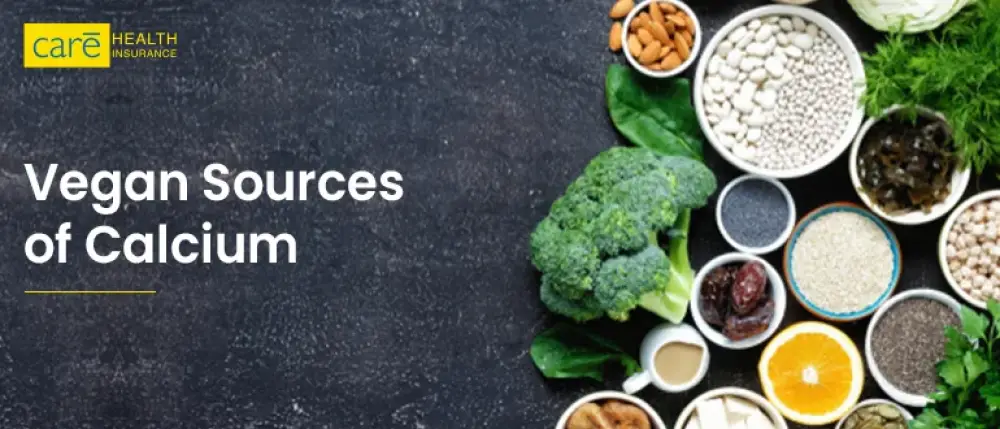
There are multiple calcium rich food for vegans, you just need the right amount and balance in your diet to get the best results.
- Soy Food: Soy products like tofu, tempeh, and natto are the natural great source of calcium. 200 ml of soya milk (calcium fortified) provides about 240 mg of calcium. Also, about 125g of plain soya yoghurt contains 150 mg of calcium.
- Beans, peas, and lentils: Beans, peas, and lentils are rich vegetarian sources of calcium and other nutrients. Soaking, sprouting, and fermenting beans and lentils help reduce their antinutrient levels, making them more absorbable. Each 80g portion of cooked bean or pulse provides around soya beans = 66 mg of calcium, chickpeas = 37 mg of calcium, aduki beans = 31 mg of calcium, kidney beans = 30 mg of calcium, broad beans = 14 mg of calcium, black-eyed beans = 17 mg of calcium, lentils = 18mg of calcium.
- Nuts and seeds: A variety of nuts and seeds in a vegan diet has a robust amount of calcium and other nutrients. Keeping a balanced amount of nuts and seeds in the diet provides a rich amount of B vitamins, magnesium, copper, potassium, selenium, and vitamins E and K.
- Vegetables and leafy greens: The dark leafy vegetables and greens are all a house for calcium and other nutrients. Around 80g portion of each cooked green leafy vegetable contains the following amount of calcium, spinach = 128 mg of calcium, kale = 120 mg of calcium, turnip greens/tops = 110g, spring greens = 60 mg, Broccoli = 28 mg, and the brussels sprouts = 16 mg of calcium.
Conclusion
Incorporating vegan sources of calcium into your diet benefits your overall health. From leafy greens to fortified plant milk and tasty legumes, a diverse range of options ensures you can meet your calcium needs without using animal-derived products. Emphasising variety and balance in your meals will help support strong bones and optimal health.
>> Also Read: Why Do You Need Calcium and Vitamin D?
Disclaimers: All plan features, benefits, coverage, and claims underwriting are subject to policy terms and conditions. Kindly refer to the brochure, sales prospectus, and policy documents carefully.
