
Loading article content...
It is a well-known fact that any individual who seeks to visit or work abroad must apply for a visa. The Visa is the primary document an immigrant requires to work and stay abroad. Each visa is recognised by a unique set of digits known as the visa number, or “visa foil number”. Ever wondered what this visa number indicates or why it is there? Let’s explore!
Let us learn in detail about visa number information and conduct a visa number check for any foreign visitor.
What is a Visa Number?
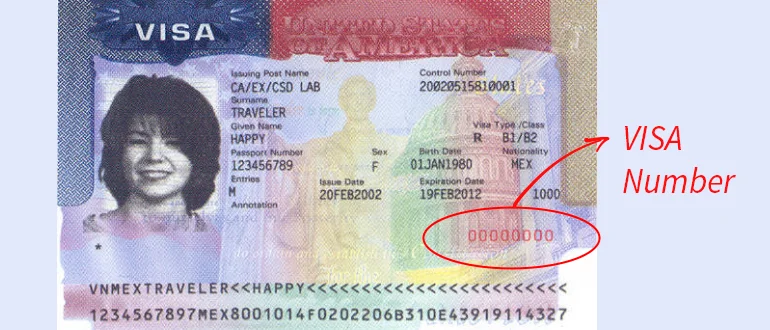
The visa number is an 8-digit number, coloured red and printed in the lower right-hand corner. Each visa document number is unique and used to track visa issuance and validity.
Interesting fact: Visas issued prior to 2000 had 6 digits and were located next to the number abbreviation in blue at the top of the visa in the centre.
Who Requires a Visa Number?
Whether you are seeking professional opportunities abroad, planning to study or exploring a new culture, you will need a valid visa number check. However, temporary visitors or non-immigrants to the U.S. do not need to obtain a visa number on a U.S. visa if they are eligible for the visa-waiver programme. The US immigration authorities allow these foreign visitors to stay in the US without a visa, but they are not allowed to work there permanently.
When is a Visa Number Required?
A visa document number is essential for clearing international borders, completing immigration paperwork, and securing permits. You will also need it whenever you perform a visa number check or check visa status using a passport number online.
The visa number fulfils the following purposes:
- Check my visa status: You can check the validity, expiry or any other updates regarding your visa with your visa number.
- Identification: Immigration officials use the visa no. check to retrieve and verify visa holders' details.
- Preventing Forgery: Unique numbers make it easy to spot counterfeit or duplicate visas.
- Apply for a visa extension or renewal: You need a visa number to apply for a visa extension or renewal.
- Required during legal proceedings: In case of any legal proceedings or immigration cases, you will need a visa document number.
- Entry Clearance: A visa number is required by border officials to process your arrival.
- Work and Study Authorisation: Companies and universities frequently request your visa number to verify your legal status and ensure they are complying with local regulations.
What is Visa Number in US Visa?
The temporary nonimmigrants who are allowed to enter the U.S. without the visa are given a visa number, which is mentioned in the visa stamp affixed on their passport. So, every time you enter the USA, the immigration authorities will do the visa number check formality by examining the visa number on the passport.
Does Every Traveller Need a Visa Number to Visit the U.S.?
It is important to know that not all travellers require a visa number to visit the U.S. Visitors from countries participating in the Visa Waiver Program (VWP) who wish to travel to the US for business or tourism may stay for 90 days without a non-immigrant visa under the VWP.
The United States of America coordinates the Visa Waiver Program and allows foreign business visitors and tourists from the member nations to enter the U.S. for 90 days without a visa.
However, India is not a member nation of the Visa Waiver Program. Hence, Indian visitors are not allowed to enter the US without a visa.
For a Schengen Visa, Indians require only one visa number to visit any European country in the Schengen region for a short period. However, they compulsorily require international travel insurance to become eligible for a Schengen Visa.

Additional Details on the U.S.Visa Other than the Visa Number
Along with the visa number, the Visa will bear the following details of the traveller:
- Issuing Port Name: This is the name of the US Embassy from where the visa has been approved.
- First & Last Name: Traveller's full name.
- Sex of the migrant: Whether the person is a male (M) or female (F).
- Nationality: Country of Origin of the traveller.
- Date of Birth: Date of birth of traveller.
- Passport Number: Identification Number as mentioned on the passport.
- Type of the Visa: This indicates the visa type the migrant has applied fore.g. H-1B, B-1, K-1 visa, or a fiancé visa.
- Entries: Here, it will be mentioned how many times the traveller is allowed to enter the United States, or in letters. Here, the letter “S” signifies a single entry, which means you are allowed to enter the US once. Whereas “M” implies multiple entries, i.e. you are allowed to enter the US more than once.
- Date of Issuance: The date when the visa was issued.
- Validity: Date till the visa is valid.
- Annotations: Additional notes that the US Consular Officer writes related to the visa, e.g. the name of your university, employer, your fiancé(e), or your spouse.
Pro Tip: Are you afraid of getting your visa rejected and losing your expensive application fees? Travel insurance acts as a financial safety net by refunding your non-refundable visa costs upon denial. As long as the rejection isn't due to your own mistakes or incomplete paperwork, your money is completely covered.
Visa Helpline Number (India)
For direct assistance with application errors, delays, or general inquiries, travellers can reach out to the official visa helpline in India.
| Parameters | Details |
|---|---|
| Primary Helpline | 1800-266-8858 |
| e-Visa Helpdesk (24x7) | +91-11-24300666 |
| indian-evisa@gov.in |
>> Also Read: How Many Types of Passports in India are there?
Plan Smart and Secure Your Visa Fees
Well, visa rejection can be a really upsetting situation that can halt your immigration plans. However, you don’t need to worry if your visa has been rejected due to no fault or negligence of your own. You must now plan your journey to the US with a smart travel Insurance plan by Care Health Insurance. In case the immigration authorities deny your visa for no fault, you can get the reimbursement of the visa fee, provided that you have properly submitted all your relevant travel documents as directed by the nation's Embassy for which you had applied for the visa.
Disclaimer: Plan features, benefits, coverage, and claims underwriting are subject to policy terms and conditions. Kindly refer to the brochure, sales prospectus, and policy documents carefully.
