
Subscribe to get weekly insights
Always stay up to date with our newest articles sent direct to your inbox
Published on 19 Feb, 2026
favorite0Like
favoriteBe the First to Like
151 Views
3 min Read
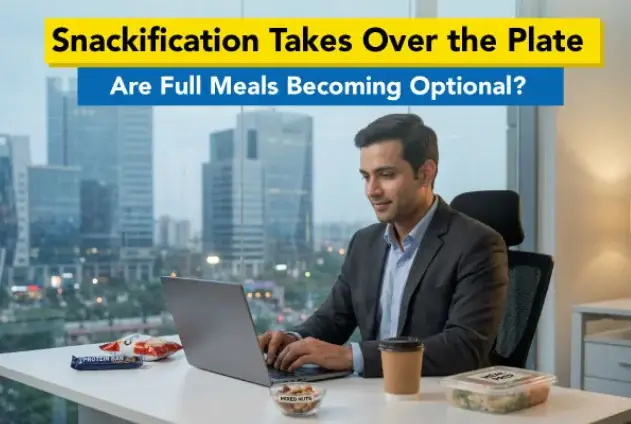
Have you realised that your lunch was just a packet of chips and a cup of coffee? Or that dinner quietly turned into a couple of biscuits, a protein bar, and maybe some namkeen in between meetings?
If yes, you’re not alone.
Snackification is a growing trend in which snacks gradually replace proper meals.
A 2025 press release based on “World Market for Snacks 2024” reported that 18% of adult Indians said they are replacing meals with snacks . That’s nearly 1 in 5 adults saying, “Snacks are meals now.”
If you think about it, snackification can feel practical, as many people’s lives are busy, workdays are long, and sitting down for a complete meal often feels like a luxury. Grabbing a quick bite seems more straightforward, faster, and sometimes, even ‘healthier’. But is this habit actually doing our bodies any good?
The central question is: Is that actually acceptable for the body?
Let’s chew on this for a bit!
____________________________________________________________________________
Snackification is not happening because people suddenly love chips or biscuits more than dal-chawal. It’s happening because life is structured in a way that pushes us there:
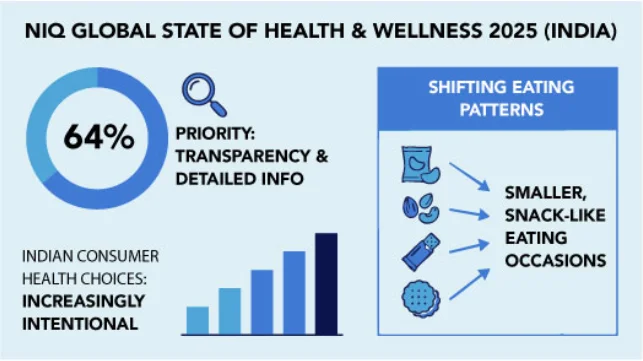
In fact, a NielsenIQ (NIQ) press release from its Global State of Health & Wellness 2025 (India findings) notes that Indian consumers are increasingly making intentional health choices, with 64% prioritizing transparency and detailed product information. People do care about health, but their eating patterns are still shifting toward smaller, snack-like eating occasions.
____________________________________________________________________________
A meal is typically designed to be balanced in carbohydrates, protein, healthy fats, fibre and micronutrients. Whereas snacks, even the exceptionally ‘healthy’ ones, often aren’t. Compared to nutrient-dense options such as fruits, nuts and plain yoghurt; snacks are high in saturated fat, sugar and sodium.
Also, snacking isn’t rare. It has been found that people consume approximately 2 snacks per day. That’s totally fine when snacks are supporting meals. The trouble begins when they start replacing your meals.
____________________________________________________________________________
____________________________________________________________________________
Eating isn’t just about feeding the body; it’s also about mindful breaks and enjoying social connections. Constant snacking often happens while you are working, scrolling or watching screens. This distracted eating dulls your hunger cues, making it harder to know when you’re actually hungry or full.
Skipping shared mealtime simply means missing out on social interaction and bonding, whether it's a family dinner or a lunch break with friends or colleagues. Over time, food has become fuel rather than nourishment.
____________________________________________________________________________
Snacking is not the issue; rather, replacing meals with low-nutrient, high-calorie snacking can become a concern.
Finding a Mid-Way Solution
If snacking habitually has become an indispensable part of your routine, try mindfully switching to healthier, more natural snacks.
Munching on fruit and nuts, yoghurt, roasted chana, boiled eggs, or homemade options can help maintain energy between meals. However, planning well-balanced meals, even simple ones, can make a big difference to your levels of energy and well-being.
Snackification may seem like a harmless habit, but over time, it can subtly affect our nutrition, energy levels and long-term well-being. Today, everyone is busy, and convenience often wins, but our health pays the price for that convenience.
The next time hunger strikes, pause for a moment. Ask yourself, does my body need a snack, or does it need a proper meal? When it comes to health, small daily choices add up.
So, here’s our question: Are you simply fuelling your body or gaining nutrition and wellbeing from what you eat? We’d love to hear your take.
Until then, wishing you a healthy day.
We come up with more such informative insights every month. Stay tuned to receive insightful articles directly in your mailbox!
Reference: pmc.ncbi.nlm.nih.gov, medicalnewstoday.com, news-medical.net
favoriteBe the First to Like
