
Subscribe to get weekly insights
Always stay up to date with our newest articles sent direct to your inbox
Published on 11 Nov, 2025
favorite4Likes
180 Views
3 min Read
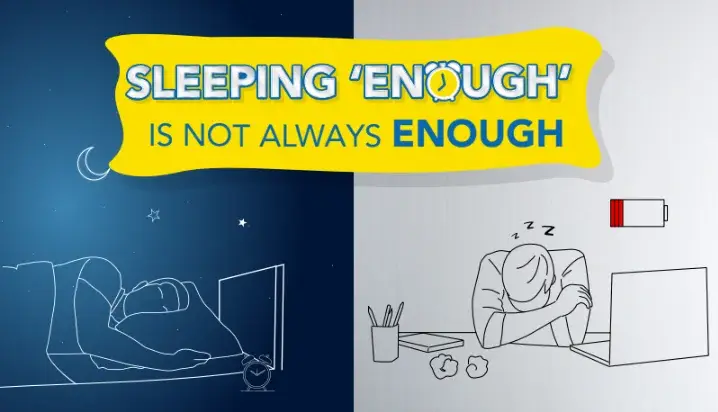
Do you agree that your efficiency levels depend on whether you had enough sleep the previous night?
But what is ‘enough’ sleep?
For some, even 6 hours is enough for an efficient day after, whereas for others, even 10 hours of sleep may not be sufficient to overcome exhaustion.
The reason? Research shows that while most adults need 7-9 hours of sleep, the ‘quality’ of sleep you get is just as important as the ‘quantity’.
________________________________________________________________________
If you are still feeling tired after 8 hours of sleep, it could be due to your age, genetics, lifestyle, health-related issues, or various other factors. Moreover, sleep disorders, mental health issues, environmental factors, lack of physical activity and excessive screen time can also result in fatigue, regardless of the quantity of your sleep.
If you’re feeling foggy and tired during the day, it could be a sign of an underlying sleep disorder such as sleep apnea, restless legs syndrome, insomnia, narcolepsy or hypersomnia. These conditions may affect your ability to get enough rest and maintain wakefulness.
Mental health issues: Mental health significantly affects the sleep cycle, and this connection is often bi-directional, meaning poor sleep can impact mental health adversely, and vice versa. As a result, conditions such as anxiety or depression could result in constant fatigue.
Environmental factors: Conditions such as light exposure, noise levels, temperature, and even the physical environment of the sleeping space can disrupt sleep patterns.
Lack of physical activity: Inadequate activity can also negatively impact your sleep, potentially leading to insomnia, reduced sleep duration and poorer sleep quality.
Excessive screen time: Engaging with electronic screens, particularly before going to bed, affects sleep by suppressing melatonin production, disrupting the body's natural sleep-wake cycle (circadian rhythm) and stimulating the brain, making it harder to fall asleep.
____________________________________________________________________________
Sleep isn't a uniform state; the body and mind go through distinct phases or cycles, each serving critical roles in restoring your body and mind. Understanding these stages can help highlight why sleeping enough isn’t always truly refreshing.
Adults typically move through 4 to 6 sleep cycles a night, each lasting around 90 to 110 minutes. As the night progresses, cycles lengthen, while the balance of sleep stages shifts.
____________________________________________________________________________
You spend one-third of your life sleeping, and still, it is something that many of us struggle with. Not getting enough sleep can affect your mental health and also put your physical health at risk. While calculating the quantity of sleep is relatively simple – as it is measured by a clock, let’s talk about a few ways in which you can improve the quality of your sleep.
Small changes, such as sticking to a routine, moving your body more, and winding down properly before bed, can make a significant difference. Better sleep isn’t just about sleeping more; it's about being relaxed and well rested.
Liked what you read? Stay tuned to receive more such insightful articles directly in your mailbox!
Until then, share this article with the people you care about.
Stay informed, stay insured.
Take Care
References: clevelandclinic.org, calm.com, sleeptest.co.uk
