
Subscribe to get weekly insights
Always stay up to date with our newest articles sent direct to your inbox
Published on 25 Nov, 2025
favorite3Likes
167 Views
3 min Read
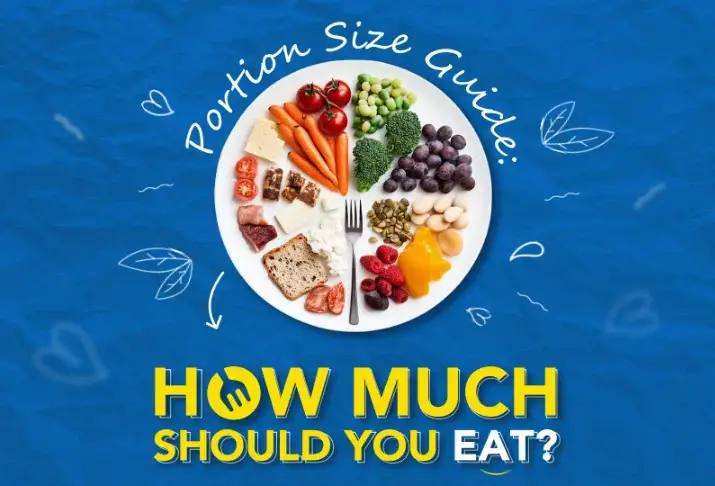
While we're constantly reminded of what to eat, ‘how much’ often slips under the radar. However, portion control plays a crucial role in maintaining energy, managing weight, and supporting long-term health. In this guide, we'll clear the air, equip you with hands-on tips, and show you how to eat just enough - no less, no more.
____________________________________________________________________________
We tend to eat to satisfy our taste buds, not our body's nutritional needs. Eating a large portion of even “healthy foods” may have a negative impact.
Limiting portion sizes doesn't mean deprivation. It’s about being intentional, understanding your hunger cues, and aligning with what your body truly needs.
____________________________________________________________________________
A diet requires you to follow strict rules, such as avoiding entire food groups, counting every calorie, or following rigid meal timings. While these approaches can lead to short-term weight loss, research shows that they often fail in the long run because they are difficult to sustain.
Portion control, on the other hand, is more flexible and sustainable. Instead of saying no to carbs or desserts and leaving you feeling wistful, it allows you to enjoy all foods, just in moderation. Portion control creates a healthier relationship with food, reducing feelings of deprivation and binge cycles often linked with dieting.
So, essentially, diets restrict, portion control empowers. It’s not about eating less—it’s about eating smart.
____________________________________________________________________________
The ideal portion of food varies based on individual factors like age, sex, weight, height, and metabolism. It also depends on your level of physical activity. However, here are some rules of thumb that can give you some indication:
Recommended portion: About the size of your palm (90 -120 g cooked, or ~3 - 4 oz).
Recommended portion: Approximately the size of your fist (~½ to 1 cup cooked, or 30-75g uncooked).
Recommended portion: 2 cupped hands per meal (~1 - 2 cups cooked/raw).
Recommended portion: One clenched fist (~1 medium fruit or 80 - 100 g).
Recommended portion: About the tip of your thumb (~1 teaspoon oil, butter, ghee).
Recommended portion: 1 cup milk/yoghurt (~200 ml) or two slices of cheese (~30 g).
Recommended portion: Small handful of nuts (~28 g), one or two squares of dark chocolate, or a small bowl of popcorn.
____________________________________________________________________________
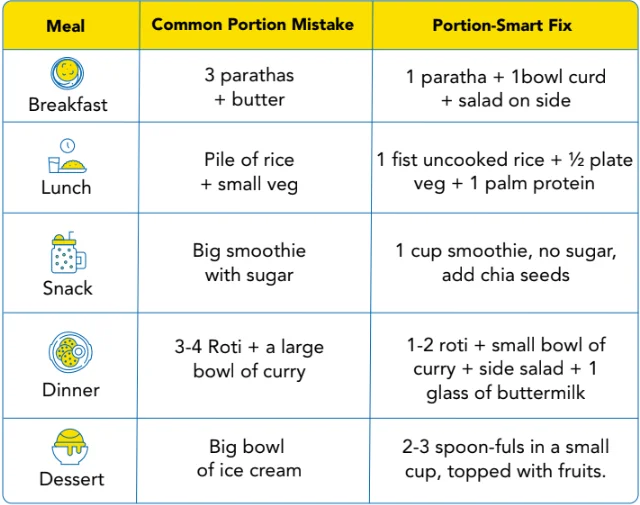
Certain habits lead you to consume large portions without your intention to do so. Try avoiding the following:
To sum it up, portion control isn’t just about your waistline; it’s about protecting your heart, gut, hormones, and long-term vitality. Even modest improvements in the amount you put on your plate can make a noticeable difference in your overall health.
For more such insightful information, stay tuned!
Till then, share this article with the people you care about.
Stay Informed, Stay Healthy.
Team Care Health
